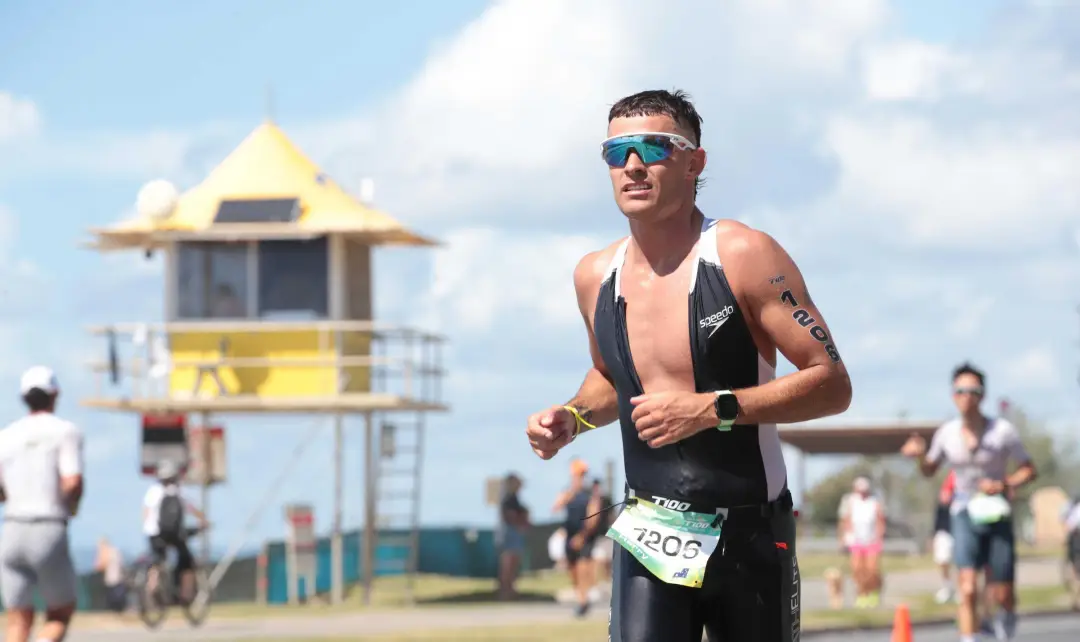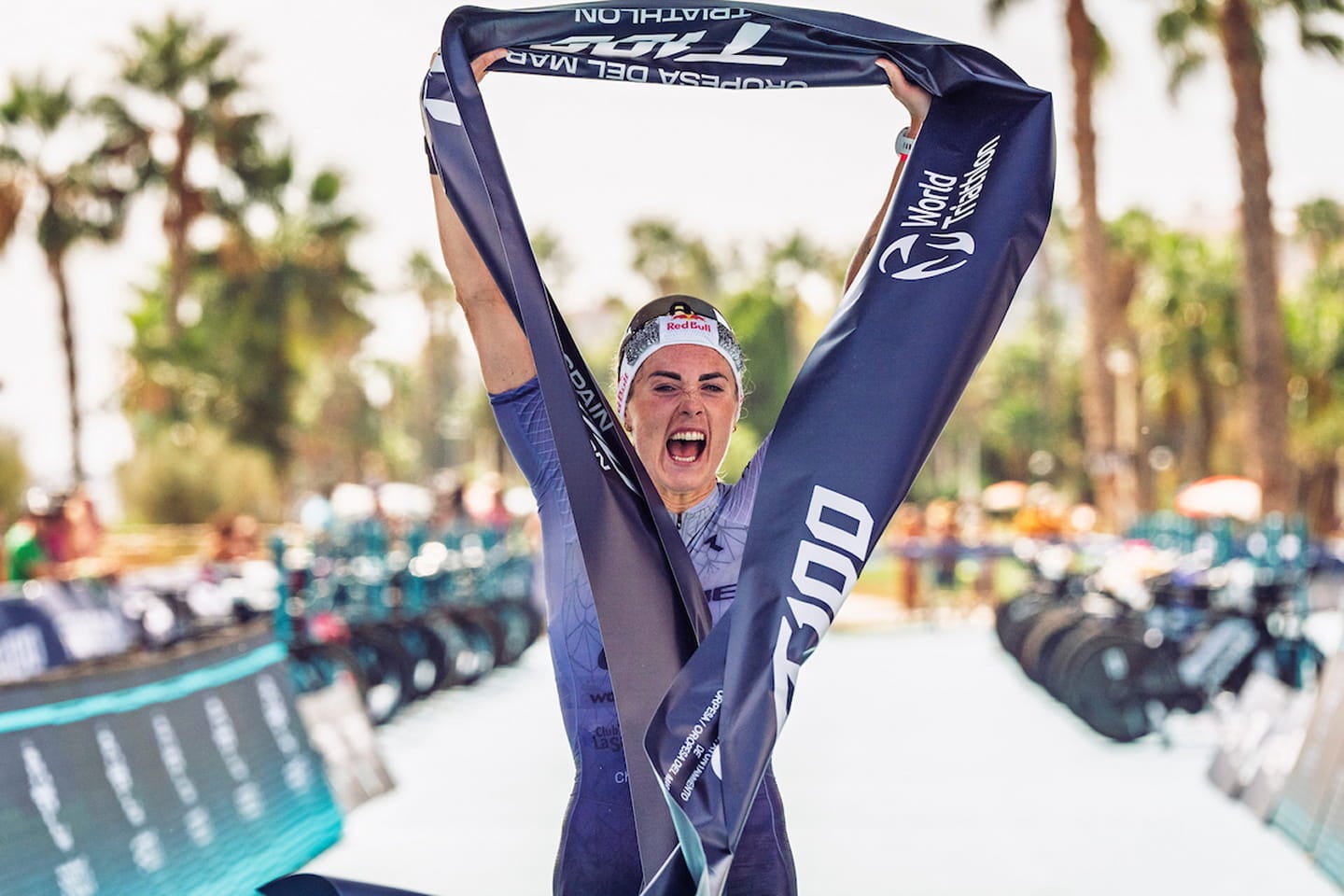














Stepping up to the starting line of your first triathlon is definitely a unique moment. When that venue happens to be a T100 Triathlon World Tour event – where amateurs share the global stages with the world’s elite professionals – the atmosphere is charged with energy, top-tier production, and iconic backdrops.
Whether you are competing in a Sprint, T50, or the signature T100 distance (2km swim, 80km bike, 18km run), racing under the Professional Triathletes Organisation umbrella feels grand. However, big-race atmosphere also brings unique race-day logistics. To turn pre-race nerves into a smooth, unforgettable performance, here is your definitive, step-by-step guide on what to expect from the moment your alarm rings on race day.
The Pre-Race Dawn: Racking, Rigging, and Registration
Your race day starts hours before the starter’s horn sounds. At major tour events, transition zones (T1 for swim-to-bike and T2 for bike-to-run) operate like well-oiled machines, and timing is everything.
Transition Setup (T1/T2)
- Security & Check-in: Triathlon World Tour events run tight security. Expect to show your bib number or athlete wristband to enter the transition area. Officials will conduct quick helmet and brake checks at entry – all to guarantee bike course safety.
- Finding Your Spot: Your spot in transition will be assigned by your race number. Hang your bike by the saddle or handlebars depending on the rack style provided. Also concentrate (before the start of the race) on the designated route in transition zones: make sure to find the spot where you’ll enter T1 after the swim, where to exit with your bike, where you return into T2 and where you exit for the run. Tip: Checking the route with an official is always worth doing.
- Layout Mechanics: Space is premium. Organise your gear neatly beneath or directly beside your front wheel.
- T1 Setup (Swim to Bike): Helmet (unbuckled, opening facing up), sunglasses inside the helmet, race belt with bib, bike shoes (pre-clipped or laid out), and nutrition.
- T2 Setup (Bike to Run): Running shoes (preferable with elastic laces), visor/hat, and any additional gels or flasks.
- Tires and Gearing: Before the race, make sure to pump your tires to your desired pressure, double-check your chain is on the small chainring (for an easier initial spin out of T1), and ensure your bike computer is powered on and acquiring a GPS signal.
Body Marking and Timing Chips
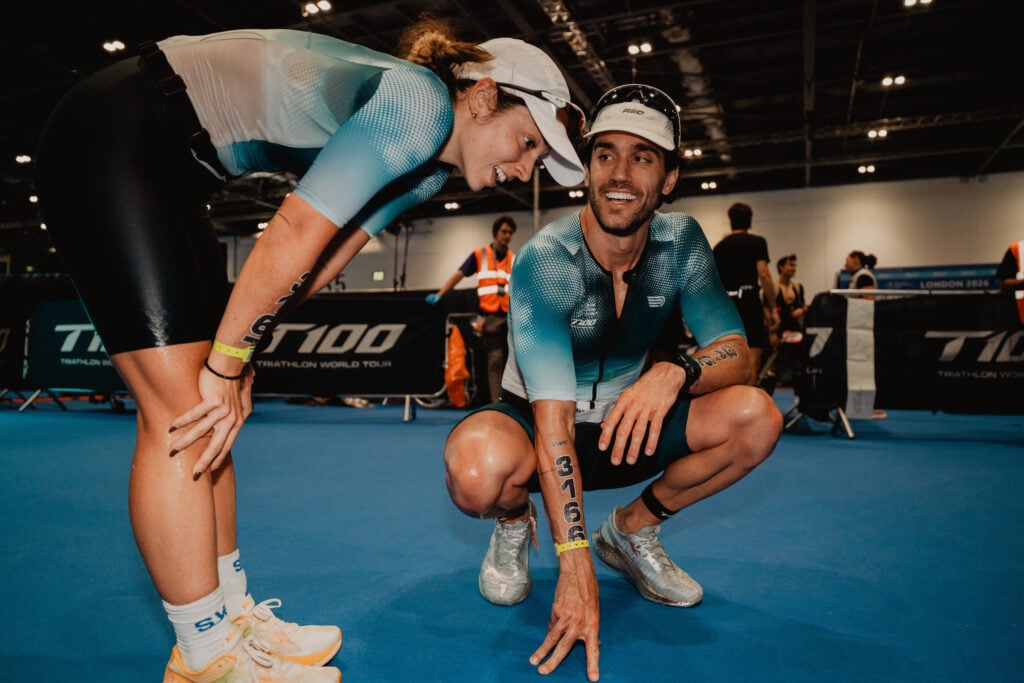
At registration or upon transition entry, your race number will be applied to your arms/legs via temporary tattoos or markers (most of the time, you’ll do this yourself), and you will secure your timing chip to your left ankle. Rule of thumb: left ankle prevents the chip from getting caught in your bike’s chainring.
The Swim: Navigating the Washing Machine
Triathlon World Tour races take place in spectacular waters – from urban docks to scenic lakes.
The Start Format
Unlike chaotic massive mass-starts of the past, most modern amateur events use a rolling start or wave start based on age categories or self-seeded swim times.
- You will enter the water in small groups (e.g., 4 to 6 athletes every few seconds).
- Mental Tip: Seed yourself accurately. If you place yourself too far forward, stronger swimmers will swim over you; seed too far back, and you will waste energy navigating around traffic.
Water Dynamics & Sighting
- The “Washing Machine” Effect: The first 200 meters most of the time will feel crowded. Keep your strokes deliberate and breathe away from splash zones. If panic sets in, flip onto your back, take three deep breaths, reset, and resume freestyle.
- Sighting Technique: Unlike pool swimming, open water has no black line. Sight every 6 to 10 strokes by lifting your eyes just high enough above the surface to spot the turn buoys (“alligator eyes”) before turning your head to side-breathe.
Transition 1 (T1): Swim to Bike
Transition is often called the ‘fourth discipline’. At high-profile Triathlon World Tour events, transition chutes can be long.
- Exiting the Water: Unzip your wetsuit down to your waist as you run up the swim ramp. Pull your goggles and cap off, keeping them in your hand.
- At Your Rack: Strip the wetsuit completely off, put on your sunglasses, buckle your helmet (always buckle before touching your bike), strap on your race belt (bib facing your back for the ride), put on your bike shoes, and grab your bike.
- The Mount Line: Walk or jog your bike out of transition. You must not mount your bike until both feet completely cross the solid mount line marked by organisation.

The Bike Leg: Pacing, Draft Rules, and Nutrition
The bike leg makes up the largest portion of your race – at least measured in time. Triathlon World Tour courses feature closed or traffic-managed roads designed for fast, dynamic riding.
| Aspect | What to Expect & Strategy |
| Drafting Rules | Amateur races under tour rules are strictly non-drafting. You must maintain a specified draft zone (typically 12 or 20 meters distance between your front wheel and the rear wheel of the athlete ahead). |
| Overtaking | When passing, you have 20–25 seconds to complete the pass. If you are passed, you must drop back out of the draft zone immediately. Technical officials on motorbikes enforce this strictly. |
| Pacing Strategy | Resist the surge of adrenaline during the first 15 minutes on the bike. Stick to your target wattage or perceived exertion (RPE). A good rule for T100 distance is to ride at an effort where you can still answer a short question aloud. At T50 or even shorter distance, most likely you can push a bit more. |
| Hydration & Fueled Success | Consume your first sip of fluid 10–15 minutes into the ride once your heart rate settles. Aim for 60g to 90g of carbohydrates per hour using a mix of sports drinks, gels, or chews mounted to your frame. Make sure to make use of the aid station on course. |
Transition 2 (T2): Bike to Run
As you complete the bike loop, prepare your mind for the quick shift to running legs.
- Dismount Line: Slow down well before the dismount line. Unclip early or dismount smoothly before crossing the line.
- Rack First: Store your bike in your designated rack position before unbuckling your helmet.
- Quick Change: Re-rack the bike, unbuckle your helmet, slip on your running shoes, spin your race belt around so your bib number faces your front, grab your visor/nutrition, and head out.
The Run: The Battle of Willpower
Leaving T2, your legs will likely feel heavy and unresponsive – a phenomenon commonly known as ‘brick legs’.
Managing the ‘Brick’ Feeling
Don’t panic if your legs feel like lead for the first 1 to 2 kilometres. This is completely normal as blood redirects from cycling muscles to running muscles. Your cadence will feel erratic; slow down slightly until your stride normalises. Or keep pushing on until the normal feeling returns: it’s totally up to you.
Aid Stations & Spectator Support
Triathlon World Tour race courses are designed to be spectator-friendly, most of the time featuring multi-lap run courses with high energy and packed finish-line grandstands.
- Aid Station Etiquette: Aid stations occur roughly every 1.5 to 2.5 km. They offer water, electrolyte drinks, gels, and sometimes ice or sponges.
- Pacing the Stations: Walk through the aid stations to successfully drink without choking, then resume your target running pace. If you are more experienced, of course you can try it to grab and then use your nutrition running.
Finish & Post-Race Recovery
As you turn onto the final chute, you will experience the signature Triathlon World Tour finish line, complete with stadium announcers and roaring crowds.
Finish Line Workflow:
Cross the Line -> Receive Medal -> Remove Timing Chip -> Enter Recovery Zone -> Hydrate & Refuel
- Crossing the Line: Stand tall, smile, and raise your arms – give the photographers a clean shot without blocking your bib number.
- Post-Race Recovery: Volunteer handlers will remove your timing chip (but sometime you’ll do this yourself at a later moment) and present you with your finisher medal. Move directly into the athlete recovery area to grab water, recovery beverages, and post-race food.
- Celebrate: Don’t forget to celebrate and be proud about your performance. Your finish line moment most likely is a moment you’ll never forget.
- Bike Checkout: Transition will reopen for gear collection at a specified time post-race. You will need your athlete bib/wristband matching your bike’s frame number to check your gear out.
Essential First-Timer Checklist for T100 Race Day
Pro Tip: Lay out all your gear the night before to audit every item visually.
- Race Gear: Wetsuit, goggles, tri suit, helmet, cycling shoes, running shoes (with lock laces), socks, race belt + bib.
- Nutrition: Pre-mixed bottles, energy gels, salt caps, post-race recovery shake.
- Accessories: Anti-chafing body glide, sunscreen, bike pump, small towel for T1/T2, heart rate monitor/GPS watch.
- Documentation: ID, race registration confirmation, National Federation membership (if in place).
Final Thoughts
Your first Triathlon World Tour event is equal parts physical challenge and festival of sport. The key to a successful debut isn’t breaking world records – it is controlling the controllable logistics, honouring your pacing plan, and soaking in the atmosphere of a world-class venue. Which includes watching the professionals on the course you’ve just raced – or are about to race – which is a unique feature of T100 weekends.
When it gets tough out on the course, remember that every athlete around you is pushing through the exact same struggle. Trust your training, execute your plan, and enjoy the finish line glory.
Ready to take part?
Find all the information and registration details for the remaining 2026 and upcoming 2027 Triathlon World Tour events here: https://t100triathlon.com/