













Australia’s summer heat is part of everyday training for athletes who live there. But a professional triathlete’s season also takes them from humid Asian race courses to cooler, wetter conditions in Europe and North America.
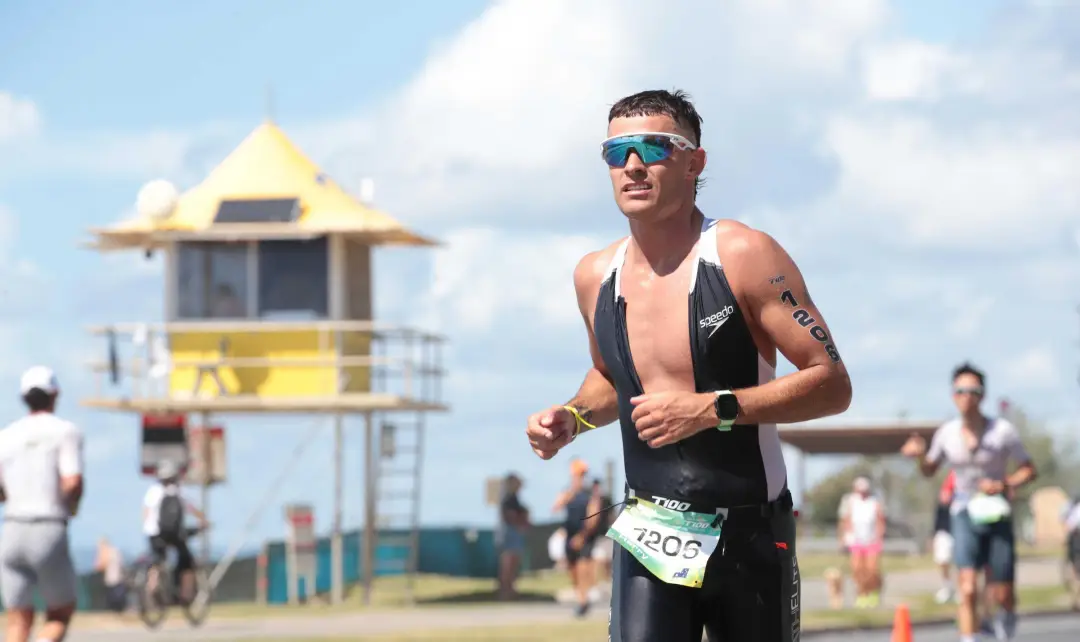
Australian professional triathlete Ellie Salthouse finished 6th within the 2025 T100 standings and sits 18th heading into the final races of 2026. She grew up in Queensland, Australia and is still based there. Known as the Sunshine State, Queensland is usually either hot and humid or warm and dry. With a race calendar that spans the globe, Ellie knows what it takes to switch between conditions at home and those she meets on the road. Here she shares how she trains in the Australian heat and how she adapts when racing takes her somewhere very different.
To register for the 2027 Gold Coast T100 Triathlon on 20-21 March, visit https://t100triathlon.com/gold-coast/participate/
Training through an Australian summer
For athletes heading to the Gold Coast T100 in March, Australian heat is part of the race-day picture. Even for those who live with it all year, training in the heat isn’t about toughing it out. It’s about planning around it. Ellie shared her experiences of training in such a climate:
What makes training through an Australian summer different from other places you’ve trained?
“The biggest difference here in QLD is the humidity. It gets you really fit quickly, but if you don’t factor it in and make adjustments to your training, nutrition and fueling, you can really come undone.”
How do you plan your training week around the hottest days?
“We typically start our longest sessions of the day around 5:30am to try and beat the heat. I then swim during the day when it is warmest, and save my final session for the evening once it has cooled down a little. Our planning doesn’t adjust too much for the summer months, but it is nicer to have longer daylight hours so we can start earlier and get back to the aircon for recovery.”
What are the biggest mistakes you see athletes make when training in Australian heat?
“The biggest mistake I see is athletes forgetting to factor in the humidity when planning their fuelling and hydration strategies. I also see a lot of athletes trying to acclimatise and achieve additional fitness benefits by training during the middle of the day, but that just fries you for future sessions and is unsustainable for longer than a few days.”
Racing around the world: adapting to every climate
A pro season can mean heat and humidity in one race, and then cool water and wind in the next. Each one needs a different approach to preparation, pacing and kit.
How do you prepare for a hot and humid race compared with a cooler one?
“Hot and humid races are my ideal conditions, having grown up in that climate. I always start a heat protocol in the sauna about 6 weeks out from a hot race, but I get most of my acclimation just from being outside and training in the heat at home.”
How long before a race do you like to arrive, and what do you do in your first few days there?
“This typically depends on where I am travelling from. If I am travelling to a race from Australia, it is likely a long trip with a significant time change, so I like to arrive 7-10 days out. It takes me a few days to shake off the travel and get into the swing of things. The first few days I like to get straight onto the time zone, check out the race course, and continue to get some quality training done before starting my taper 5 days out.”
What’s the hardest switch you’ve had to make between two very different climates?
“The hardest switch for me is always going from training in the Australian summer to racing in the USA/European winter. I have raced a few early season races in the northern hemisphere and prepared across our summer back home, but it is very difficult to simulate colder conditions when I am used to temperatures in the mid to high 30ºC.”

Heat acclimatisation: how to prepare
Not everyone can arrive weeks early. For athletes coming from a cooler climate, preparing well is about giving the body time to adjust, managing effort and letting go of familiar numbers for a while.
How can athletes prepare and adapt if they only have a few days in a hot climate before race day?
“If athletes only arrive a few days before the race, it would be ideal to get as much time in the sauna back home before they arrive in the hot conditions. Once on location, athletes should try and train outside where possible, but avoid spending unnecessary time in the heat in the last few days prior to the race to avoid dehydration, lethargy and sunburn.”
Is there anything athletes can do at home, in a cooler climate, to prepare for a hot race?
“The sauna is key for heat acclimatisation if athletes are preparing in cooler climates.”
How should athletes approach acclimatisation without compromising their recovery?
“To avoid compromising recovery and future sessions, athletes need to schedule their sauna sessions at optimal times. Hydration and fuelling also need to be considered and adjusted to allow for the additional stress on the body. If athletes are preparing on location in hotter climates, it is important to prevent unnecessary exposure to the elements, beyond what is necessary for training.”
Recovery
What recovery habits make the biggest difference after racing or training in the heat?
“The best recovery habits for me in the heat are spending as much time indoors in the aircon, taking ice baths or cold baths to bring my core temp down after sessions, and adequate hydration and fueling before, during and after sessions.”

Hydration, recovery and knowing your limits
Looking after yourself in the heat matters as much as completing the session. Hydration, fuelling, cooling and recovery all play a part, and so does knowing when something isn’t right.
How do you approach hydration before, during and after training in the heat?
“Sodium is probably the greatest tool in the heat. I always have a PF sodium tab or electrolyte mix in my water bottle during the hotter months, never just plain water. This ensures I am showing up to my sessions already hydrated, rather than playing catch-up. I use the FlowBio to determine my exact fluid and sodium losses, particularly when arriving in a new location, so I can adjust my fluid intake and sodium concentration to the current climate. This allows me to plan my fueling during sessions and what I need to continue to replace afterwards.”
When are electrolytes most useful to you?
“In hotter climates, electrolytes are useful all the time, but especially during training sessions when I am sweating a lot.”
What are the early warning signs that tell you the heat is affecting you more than it should?
“Heart rate gives the best feedback for athletes in the heat and is a great indication of how hard you’re pushing, despite pace and power. The heat can also make athletes quite lethargic, particularly if they’re not used to it, so can also be used as good feedback.”
How do you balance sticking to your plan with knowing when to back off?
“I think the plan should always be adjusted to match the conditions, which is particularly important in the heat. For me, I always have data in addition to pace and power, such as heat rate and ventilation, which provides a more reliable measure of current output. Often in the heat and humidity, these secondary measures can prove more reliable and can prevent athletes coming unstuck by trying to hit numbers they would normally achieve in temperate conditions.”
Editorial note: Athletes who feel unwell should stop exercising and move somewhere cool, and suspected heat stroke is a medical emergency.

Ellie’s top tips for racing in any climate
Before we leave you to your training, Ellie has the final word:
What’s one thing you wish every athlete knew before racing in the heat?
“Check the humidity. It’s one thing to prepare for the heat but the humidity is often the factor that people forget about and can actually be the most crucial when it comes to preparing for race day.”
What’s your golden rule for adapting to a new climate?
“Wear a FlowBio during your training sessions from the moment you arrive. It literally gives you your exact fluid and sodium losses during your sessions so you can adjust your hydration strategy for future sessions and race day.”
What would you say to an athlete who’s frustrated that their pace or power is lower than usual in the heat?
“It is normal and the same for everyone. I would recommend other forms of measuring output in the heat, rather than relying solely on paces and power. Heart rate is often more reliable in the heat and a better indication of physical output.”
Ready to race?
Heat, humidity and changing climates deserve respect, but they don’t have to hold you back. With smart preparation, realistic expectations and a willingness to adapt, you can arrive at any start line ready to race.